大学化学 >> 2023, Vol. 38 >> Issue (10): 235-242.doi: 10.3866/PKU.DXHX202301036

化学实验 上一篇    下一篇

“自主设计实验”教学模式在仪器分析实验中的应用——ICP-OES检测茶水中的金属含量

高敏莉1,3, 何博锐1,3, 董佳欣1,3, 费澄莹1,3, 傅舒帆1,3, 丁佳欣1,3, 顾思奕1,3, 李瀚洋1,3, 李嘉媛1,3, 丁祖旺1,3, 丁敬康1,3, 衡幸睿1,3, 丁飞1,2, 陈朗星1, 朱义州1, 王京1,2,*()   

  1. 1 南开大学化学学院, 天津 300071
    2 化学国家级实验教学示范中心(南开大学), 天津 300071
    3 天津大学化工学院, 天津 300072
  • 收稿日期:2023-01-28 录用日期:2023-03-01 发布日期:2023-03-29
  • 通讯作者: 王京 E-mail:wangjing844@nankai.edu.cn
  • 基金资助:
    南开大学本科教育教学改革项目(NKJG2020335);南开大学2022年实验课程改革项目(22NKSYSX08)

The Application of "Self-Designed Experiment" Teaching Mode in the Instrumental Analysis Experiment: Determination of Metal Elements in Tea by ICP-OES

Minli Gao1,3, Borui He1,3, Jiaxin Dong1,3, Chengying Fei1,3, Shufan Fu1,3, Jiaxin Ding1,3, Siyi Gu1,3, Hanyang Li1,3, Jiayuan Li1,3, Zuwang Ding1,3, Jingkang Ding1,3, Xingrui Heng1,3, Fei Ding1,2, Langxing Chen1, Yizhou Zhu1, Jing Wang1,2,*()   

  1. 1 College of Chemistry, Nankai University, Tianjin 300071, China
    2 National Demonstration Center for Experimental Chemistry Education, Nankai University, Tianjin 300071, China
    3 School of Chemical Engineering and Technology, Tianjin University, Tianjin 300072, China
  • Received:2023-01-28 Accepted:2023-03-01 Published:2023-03-29
  • Contact: Jing Wang E-mail:wangjing844@nankai.edu.cn

摘要:

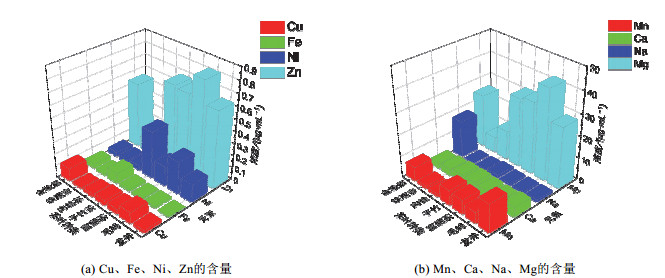
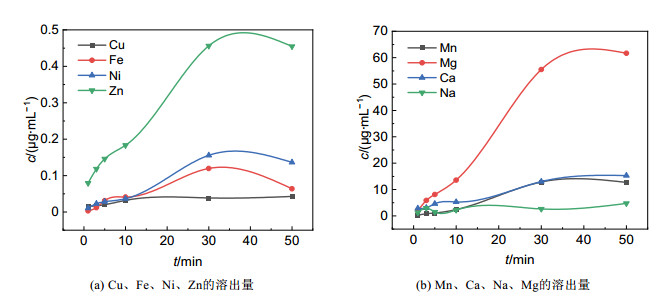
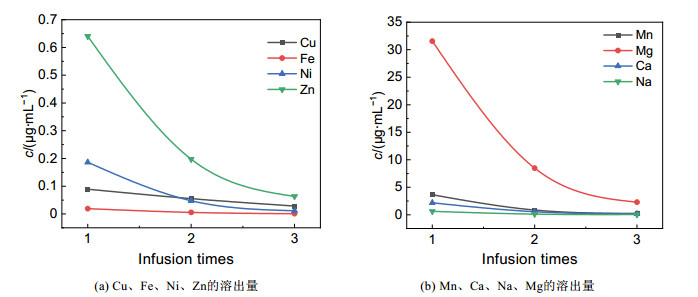
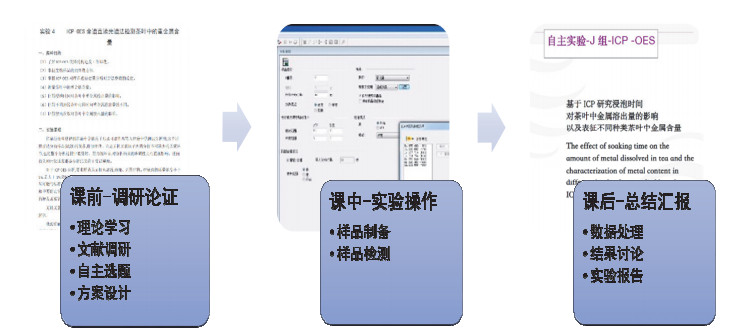
仪器分析实验是重要的实践课程,是培养学生创新意识和提高学生综合素质的关键基础课程之一。“自主设计实验”坚持学生主体地位,引导学生查阅文献、拟定实验方案,在教师辅助指导下,将知识要点有效融入实验过程,深化理论学习和实践应用。本实验利用电感耦合等离子体原子发射光谱(ICP-OES)测定不同种类茶水中的金属元素含量,并且考察了浸泡时间和浸泡次数对金属元素溶出量的影响,鉴定其是否符合国家标准要求,对比现有的文献数据作出补充和改善,为人们选取泡茶方式提供理论依据和指导建议。“自主设计实验”将化学和日常生活紧密联系在一起,激发学生的学习热情和探索精神,强化实验操作能力及自主学习能力,提升学生的创新意识和实践精神。

关键词: 仪器分析实验, 教学改革, 自主设计实验, 电感耦合等离子体发射光谱法, 茶, 金属

Abstract:

Instrument analysis experiment is an important practical course. It's the basis for cultivating students' innovative awareness and improving students' comprehensive quality. "Self-designed experiment" adheres to the principal position of students, guides students to consult literature and formulate experimental plans by themselves. It effectively integrates the key points of knowledge into the experimental process under the assistance and guidance of teachers, so as to deepen the theoretical learning and the practical application. In this experiment, inductively coupled plasma optical emission spectrometry (ICP-OES) was used to determine the content of metal elements in different kinds of tea. The influence of soaking time and the number of soaking on the dissolution of metal elements was investigated to identify whether it met the requirements of national standards, and the existing literature data were compared to supplement and improve. It provides the theoretical basis and guidance for people to choose the way of brewing tea. "Self-designed experiment" closely links chemistry with daily life, stimulates students' learning enthusiasm and exploration spirit, aims to strengthen students' experimental operation ability and autonomous learning ability, and enhance students' innovative awareness and practical spirit.

Key words: Instrumental analysis experiment, Teaching reform, Self-designed experiments, Inductively coupled plasma optical emission spectrometry, Tea, Metal elements