大学化学 >> 2023, Vol. 38 >> Issue (1): 233-239.doi: 10.3866/PKU.DXHX202201019

化学实验 上一篇    下一篇

黄酮药物分子的高效合成

房忠雪, 金琦浩, 文浩宇, 孙文婷, 戴兢陶()   

  • 收稿日期:2022-01-12 录用日期:2022-04-27 发布日期:2022-05-23
  • 通讯作者: 戴兢陶 E-mail:ycjtdai@163.com
  • 基金资助:
    2019年江苏省高等教育教改研究课题(2019JSJG176);盐城师范学院教育教学改革课题资助(2021YCTCJGY033)

The High Efficiency Synthesis of Flavonoid Drug Molecules

Zhongxue Fang, Qihao Jin, Haoyu Wen, Wenting Sun, Jingtao Dai()   

  • Received:2022-01-12 Accepted:2022-04-27 Published:2022-05-23
  • Contact: Jingtao Dai E-mail:ycjtdai@163.com

摘要:

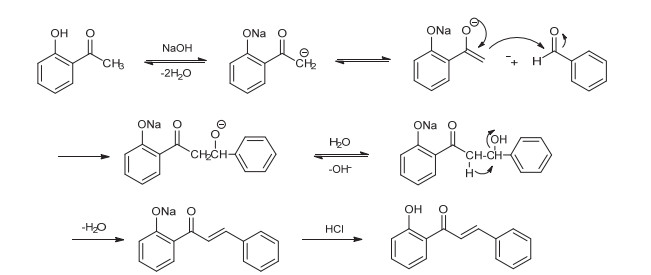
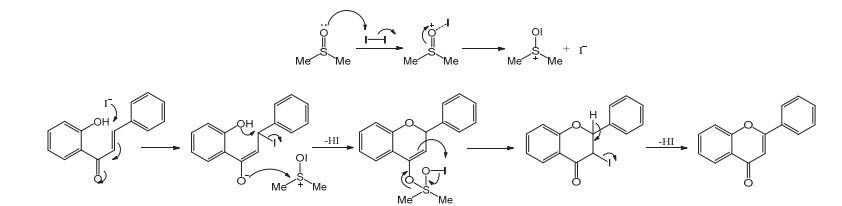
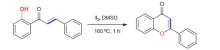
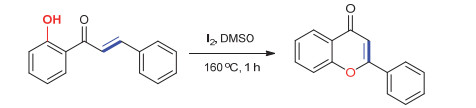
“中药槐花米中芦丁的提取”是基础有机化学实验中经典的植物提取黄酮药物的实验。分析一系列植物提取的黄酮药物分子结构,可看出它们均由2-苯基色原酮(又称黄酮)分子衍生而来。实验中,发现黄酮药物的提取率偏低,不能满足目前人们对黄酮药物的需求,因此尝试用具有高效性的化学方法合成黄酮,并进一步合成其相应的衍生物。本实验分两步合成黄酮,首先利用羟醛缩合合成2’-羟基查尔酮,然后碘催化分子内的环合得到黄酮,实验时长约为6 h,既可作为教学实验,也可作为课后的探索开放性实验。本改进实验具有安全、易操作、重复性好,特别是相对于植物提取具有产率高的优点。此外,通过本次实验的改进,引导学生采用与本实验类似的方法,设计并合成了黄酮的衍生物——乙氧黄酮(治心绞痛药物立可定中的主要活性成分)。本实验丰富了有机化学实验的教学内容,提高了分析和解决问题的能力,潜移默化地培养了学生的科学探索精神。

关键词: 黄酮, 羟醛缩合, 环化反应, 碘催化, 乙氧黄酮

Abstract:

The extraction of Rutin from Sophora japonica buds is a classic experiment performed in basic organic chemistry for the extraction of flavonoids from plants. The molecular structure of a series of flavonoid drugs extracted from plants, which are derived from 2-phenylchromogenone (also known as flavone) molecules, were analyzed. In the experiment, we found that the extraction yield of flavonoids is low and could not satisfy the current demand for flavonoid drugs. Therefore, we attempted to synthesize flavonoids and their corresponding derivatives using a high efficiency chemical method. Flavonoid synthesis was divided into two steps. First, 2'-hydroxychalcone was synthesized by aldol condensation, followed by the cyclization of iodine-catalyzed molecules to produce flavone. This experiment requires approximately 6 h to complete and can be used as a teaching experiment, as well as a development and open experiment after class. The improved experiment has the advantages of safety, easy operation, good repeatability, and high yield compared with the extraction from plants. In addition, through the improvement of this experiment, the students were guided to adopt a similar method to design and synthesize the flavonoid derivative "efloxatem" (the main active component in angina pectoris). This experiment enriched the teaching content of organic chemistry experiments, improved students' analytical ability, and cultivated their spirit of scientific exploration.

Key words: Flavone, Aldol condensation, Cyclization reaction, Lodine catalyzed, Efloxatem