大学化学 >> 2023, Vol. 38 >> Issue (10): 103-108.doi: 10.3866/PKU.DXHX202307009

所属专题: 化学虚拟教研室建设

专题 上一篇    下一篇

CO2超临界状态解析与课程思政设计

李运超(), 孟宸宸, 许慧敏, 白祎琦, 李晓宏, 祖莉莉, 高靓辉, 范楼珍()   

  • 收稿日期:2023-07-05 录用日期:2023-07-16 发布日期:2023-08-04
  • 通讯作者: 李运超,范楼珍 E-mail:liyc@bnu.edu.cn;lzfan@bnu.edu.cn
  • 基金资助:
    教育部虚拟教研室建设试点项目(师范院校物理化学课程虚拟教研室);北京师范大学校级教改项目(jx2022057)

Unveiling the Mystery of CO2 Supercritical Fluids for Better Designing the Related Ideological and Political Education

Yunchao Li(), Chenchen Meng, Huimin Xu, Yiqi Bai, Xiaohong Li, Lili Zu, Lianghui Gao, Louzhen Fan()   

  • Received:2023-07-05 Accepted:2023-07-16 Published:2023-08-04
  • Contact: Yunchao Li, Louzhen Fan E-mail:liyc@bnu.edu.cn;lzfan@bnu.edu.cn

摘要:

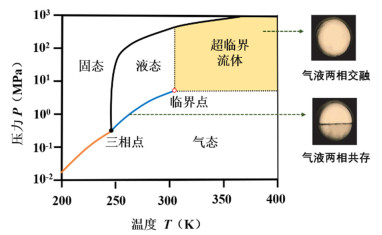
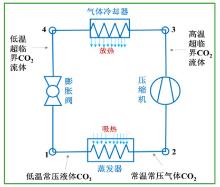
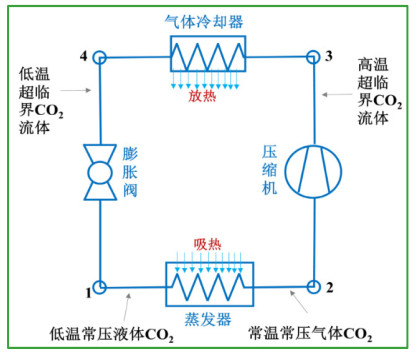
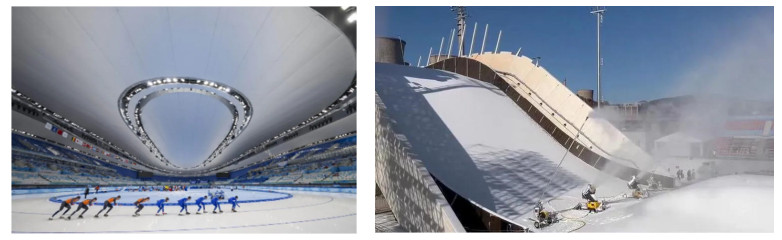
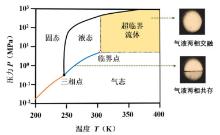
以CO2超临界状态及制冷应用为例,展示如何以解析关键概念/技术背后的物理化学原理为纽带,在课堂教学中有机融入思政案例(如北京冬奥会制冰造雪)和开展课程思政“翻转课堂”教学;籍此使学生体会到物理化学原理在解决国家重大需求中发挥的关键作用,在强化学科自信的同时,增强学生学以致用、服务国家、绿色发展的意识和开拓创新的精神。CO2超临界状态及应用是“物理化学”单组分相图中的知识难点和应用热点,在教材中常以知识拓展的形式出现,不仅与专业知识结合不紧密,学生对此也缺乏深刻理解。有鉴于此,我们以“讲透”CO2超临界状态和制冷技术背后的物理化学原理为抓手,依据知识间内在关联,环环相扣、水到渠成地开展课程思政教学。为了提升思政教学效果,还综合采用了任务驱动的自主学习、翻转课堂及课后拓展相结合的多元思政教学手段,引导学生自主发掘思政素材,实现自我思政教育,从而达到了价值塑造、知识传授和能力培养三位一体的教学效果。

关键词: 课程思政, 物理化学, 教学设计, 自我思政教育

Abstract:

This paper aims to demonstrate how to seamlessly integrate ideological and political cases, such as the application of CO2 supercritical state and its refrigeration effect in making ices and snows for the Beijing Winter Olympic Games, into classroom teaching with using the "flipped classroom" approach. By connecting these cases with the underlying physical and chemical principles behind key concepts and technologies, students can gain a deeper understanding of the crucial role played by physical chemistry in addressing our country's major needs, while also building their confidence in the chemistry discipline. Moreover, this integration enhances their awareness of applying knowledge for serving our nation and promoting green development, fostering their spirit of innovation and exploration. As one of knowledge difficulties and application hotspots in the chapter of single component phase diagram, the supercritical state of CO2 and its application often appear as knowledge expansions in textbooks, which are hard for students to comprehend. In view of this, we prioritize the explaining of the physical and chemical principles behind the supercritical state and refrigeration technology of CO2, then seamlessly integrate ideological and political education based on the inherent connections between different knowledge domains. To maximize the effectiveness of ideological and political education, we employ a combination of task-driven independent learning, the flipped classroom model, and after-school extensions. This comprehensive approach empowers students to independently explore ideological and political materials, perform self-guided ideological and political education and achieve the integrated teaching goals of value shaping, knowledge imparting, and ability cultivation.

Key words: Ideological and political education, Physical chemistry, Teaching design, Self-education in ideological and political education