大学化学 >> 2024, Vol. 39 >> Issue (3): 308-315.doi: 10.3866/PKU.DXHX202309003

化学实验 上一篇    下一篇

新实验开发:废弃PET塑料的电催化升级再造

赵彤彤1, 王嫣1, 秦时月2, 徐亮3,*(), 栗振华1,*()   

  1. 1 北京化工大学化学学院, 北京 100029
    2 北京化工大学材料科学与工程学院, 北京 100029
    3 北京化工大学化学工程学院, 北京 100029
  • 收稿日期:2023-09-01 录用日期:2023-10-24 发布日期:2023-11-14
  • 通讯作者: 徐亮,栗振华 E-mail:2023700003@buct.edu.cn;LZH0307@mail.buct.edu.cn
  • 基金资助:
    国家自然科学基金(22302006);国家自然科学基金(22108008);国家自然科学基金(22090031);中国科协青年人才托举工程(2021QNRC001)

New Experiment Development: Upgrading and Regeneration of Discarded PET Plastic through Electrocatalysis

Tongtong Zhao1, Yan Wang1, Shiyue Qin2, Liang Xu3,*(), Zhenhua Li1,*()   

  1. 1 College of Chemistry, Beijing University of Chemical Technology, Beijing 100029, China
    2 College of Materials Science and Engineering, Beijing University of Chemical Technology, Beijing 100029, China
    3 College of Chemical Engineering, Beijing University of Chemical Technology, Beijing 100029, China
  • Received:2023-09-01 Accepted:2023-10-24 Published:2023-11-14
  • Contact: Liang Xu, Zhenhua Li E-mail:2023700003@buct.edu.cn;LZH0307@mail.buct.edu.cn

摘要:

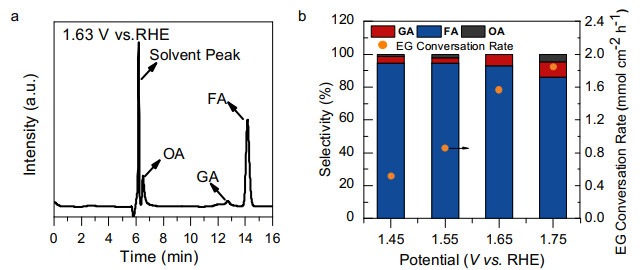
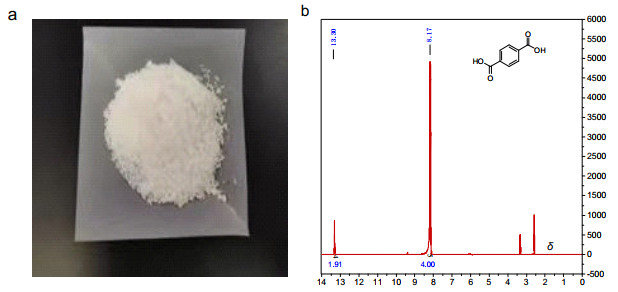
本实验设计了一种利用可再生能源提供的电能驱动的聚对苯二甲酸乙二醇酯(PET)塑料电催化升级再造策略,将废弃PET塑料成功转化为对苯二甲酸、二甲酸钾等高附加值化学品,同时联产氢气(H2)。具体实验过程包括:首先通过水热法将PET塑料进行降解得到对苯二甲酸和乙二醇单体,随后利用自制的水滑石(LDH)催化剂将乙二醇选择性电催化氧化为甲酸盐同时阴极联产H2,最后将反应液经酸化、减压过滤、旋蒸、真空干燥等分离提纯步骤得到二甲酸钾和对苯二甲酸产品。本实验是将科研成果引入教学的典型案例,不仅为废弃PET塑料资源的绿色升级再造提供了新思路,而且有利于培养学生的科学思维能力,激发科学研究的兴趣。

关键词: 电催化, PET塑料, 二甲酸钾, 氢气, 水滑石

Abstract:

This experiment designs a PET (polyethylene terephthalate) plastic electrocatalysis upgrading and regeneration strategy driven by renewable energy, converting discarded PET plastic into high-value-added chemicals such as terephthalic acid and potassium formate, while simultaneously co-producing hydrogen (H2). The specific experimental process includes firstly degrading PET plastic into terephthalic acid and ethylene glycol monomer through hydrothermal method, then selectively electrocatalyzing the oxidation of ethylene glycol to formate using a self-made hydrotalcite catalyst (layered double hydroxide, LDH) while co-producing H2 at the cathode, and finally obtaining potassium formate and terephthalic acid products through separation and purification steps such as acidification, vacuum filtration, rotary evaporation, and vacuum drying. This experiment is a typical case of introducing research results into teaching, providing new ideas for the green upgrading and regeneration of discarded PET plastic resources, and promoting students' scientific thinking ability and interest in scientific research.

Key words: Electrocatalysis, PET plastic, Formate, Hydrogen, Layered double hydroxides