大学化学 >> 2022, Vol. 37 >> Issue (6): 2107125.doi: 10.3866/PKU.DXHX202107125

师生笔谈 上一篇    下一篇

差分电荷密度在电子结构分析中的教学实践

章佳菲1, 白鸽1, 徐余幸1, 吴文清1,*(), 刘亚1, 滕波涛1,2,*()   

  1. 1 浙江师范大学化学与生命科学学院,浙江 金华 321004
    2 天津科技大学化工与材料学院, 天津 300457
  • 收稿日期:2021-07-31 录用日期:2021-09-16 发布日期:2021-10-19
  • 通讯作者: 吴文清,滕波涛 E-mail:wuwenqing1985@126.com;tbt@zjnu.cn
  • 作者简介:Email: tbt@zjnu.cn (滕波涛)
    Email: wuwenqing1985@126.com (吴文清)
  • 基金资助:
    国家自然科学基金(21872125);浙江省教改项目(jg20180064)

Teaching Practice of Charge Density Difference in Electronic Structure Analysis

Jiafei Zhang1, Ge Bai1, Yuxing Xu1, Wenqing Wu1,*(), Ya Liu1, Botao Teng1,2,*()   

  1. 1 College of Chemistry and Life Sciences, Zhejiang Normal University, Jinhua 321004, Zhejiang Province, China
    2 College of Chemical and Materials Science, Tianjin University of Science & Technology, Tianjin 300457, China
  • Received:2021-07-31 Accepted:2021-09-16 Published:2021-10-19
  • Contact: Wenqing Wu,Botao Teng E-mail:wuwenqing1985@126.com;tbt@zjnu.cn

摘要:

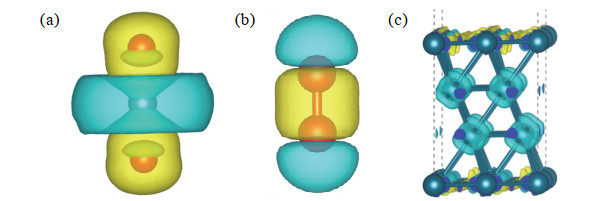
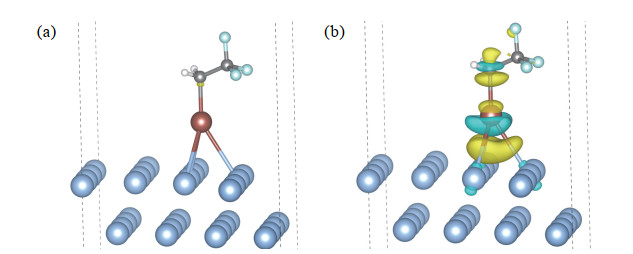
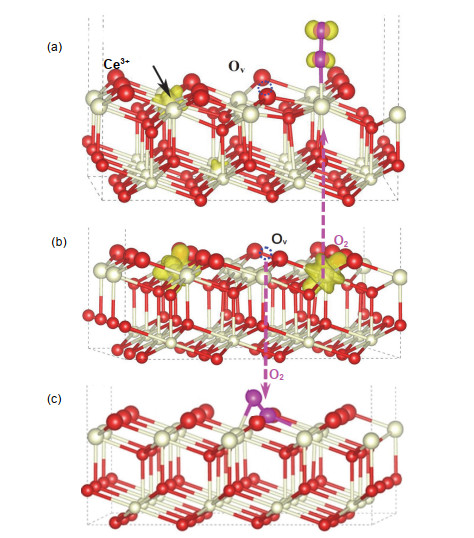
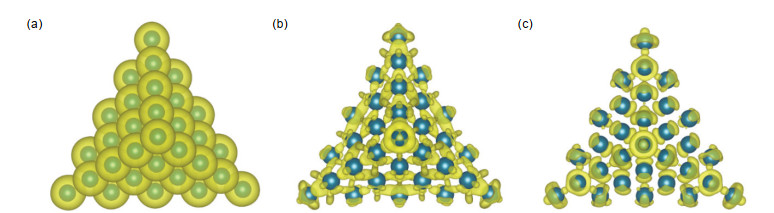
差分电荷密度可以研究分子、团簇、固体材料以及分子与固体材料间相互作用导致的电荷重新分布,广泛应用于电子结构分析。作者在长期的理论研究与“密度泛函理论在化学中的应用”课程教学过程中发现,差分电荷密度计算根据研究对象和研究目标的不同,计算方法与结果也大不相同。根据研究的目标,差分电荷密度可以分为原子基、碎片基、特定对象的差分电荷密度及自旋电荷密度。如果不能正确理解其概念,选择合适的计算方法,则无法获取正确的电子结构信息。本文系统整理了常见与特殊差分电荷密度计算的类型、计算方法与适用研究体系,通过课堂教师讲解与演示、学生练习,结合探究性课后作业,使学生深入理解、掌握这一重要电子分析方法,为教学与科研提供重要支持。

关键词: 差分电荷密度, 电子结构, 密度泛函理论, 自旋电荷密度图

Abstract:

Charge density difference (CDD) can investigate the charge redistribution of molecules, clusters and solid materials, as well as the interaction between molecules and solid materials, which has been widely used in electronic structure analysis. Based on the authors' theoretical research and teaching practice of "application of density functional theory in chemistry research", the authors found that the calculation methods and results of charge density difference vary along with the different research objectives. According to the research objectives, the charge density difference can be divided into atom-based, fragment-based, specific object-based and spin density. If one can't understand the concept correctly and establish a reasonable model, it is hard to get the correct electronic structure information. In the present work, authors systematically sort out the types, calculation methods and applicable research system of CDD calculation. Base on the teacher's explanation and demonstration, students' practice, as well as exploratory homework, students can understand and master the electronic analysis method of charge density difference, which provides important support for teaching and scientific research.

Key words: Charge density difference, Electronic structure, Density functional theory, Spin density