大学化学 >> 2023, Vol. 38 >> Issue (8): 136-144.doi: 10.3866/PKU.DXHX202208074

化学实验 上一篇    下一篇

虚拟仿真软件辅助液相色谱分离条件的绿色优化实验

石志红, 边刚, 张红医(), 张博然   

  • 收稿日期:2022-08-12 录用日期:2022-09-26 发布日期:2022-11-09
  • 通讯作者: 张红医 E-mail:hyzhang@hbu.edu.cn
  • 基金资助:
    河北省课程思政教学名师和团队项目;河北大学第九批教学改革研究项目(XJGYB051)

Green Optimization of Liquid Chromatographic Separation Conditions Based on Virtual Simulation Software

Zhihong Shi, Gang Bian, Hongyi Zhang(), Boran Zhang   

  • Received:2022-08-12 Accepted:2022-09-26 Published:2022-11-09
  • Contact: Hongyi Zhang E-mail:hyzhang@hbu.edu.cn

摘要:

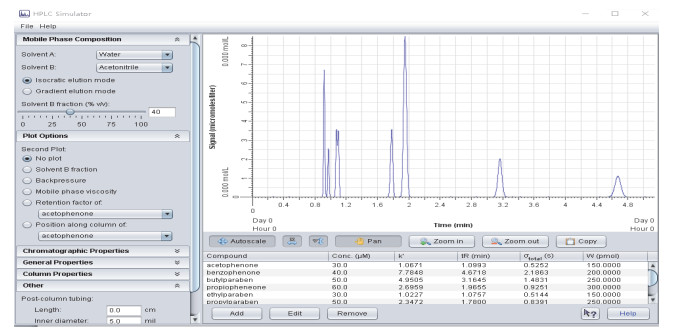
由于耗时长、废液多等制约因素,大学高效液相色谱(HPLC)实验均未涉及分离条件的优化,实验中学生只是“照方抓药”完成操作练习,其面向特定分离对象构建HPLC分析方案的实践能力并未得到有效培养。为此,我们提出一种改进方案:将色谱进样练习和大黄蒽醌类化合物的检测实验有机结合起来,在不延长学时的前提下,采用虚拟仿真软件HPLC Simulator进行色谱条件优化。学生在进样练习实验中通过分工协作获取不同温度、不同流动相配比条件下的保留时间数据;在全体同学共享实验数据的基础上,利用HPLC Simulator软件实现色谱分离条件的绿色优化。软件模拟输出的最优色谱条件在第二次课上得到实验验证。这种改进措施将原本枯燥无味的色谱进样练习升华为探索性的实验,激发了学生的学习热情。可使学生在有限的学时内掌握色谱条件的优化方法,培养学生利用信息技术解决实际问题的能力,提高信息化背景下的实验教学质量。另外,通过分工协作数据共享可以更好地培养学生的团队合作精神。

关键词: 虚拟仿真软件, 色谱条件优化, 大黄蒽醌类化合物, 绿色分析化学

Abstract:

Owing to time consumption and waste liquid production constraints, the optimization of separation conditions is not involved in high performance liquid chromatography (HPLC) experiments in colleges. In these experiments, students complete only the operation practice of "prescription preparation", and their practical ability of constructing an HPLC analysis scheme for specific objects is ineffectively cultivated. Therefore, we propose an improved procedure: the chromatographic injection practice and determination of rhubarb anthraquinone compounds are organically combined, and the chromatographic conditions are optimized using the virtual simulation software HPLC Simulator without prolonging the class time. Retention data under different temperature and mobile phase compositions were obtained in the injection practice experiment, and the data were shared by all students. The green optimization of the chromatographic conditions was then realized using HPLC Simulator. The optimal chromatographic conditions simulated were verified in a second experiment. This improved experiment transfers the boring chromatographic injection practice into an exploratory experiment that stimulates students' learning enthusiasm. It can help students master the green optimization of chromatographic conditions in limited class hours, cultivate their ability to solve practical problems using information technology, and improve the experimental teaching quality under the informatization background. In addition, the sharing of experimental data may cultivate students' teamwork spirit.

Key words: Virtual simulation software, Optimization of chromatographic conditions, Anthraquinone compounds, Green analytical chemistry