
ISSN: 1000-8438
CN: 11-1818/O6
CN: 11-1818/O6


大学化学 >> 2022, Vol. 37 >> Issue (5): 2110046.doi: 10.3866/PKU.DXHX202110046
所属专题: 第2届全国大学生化学实验创新设计竞赛
薛智1,*( ), 戴先芝1, 余列1, 杨子松1, 洪一艳1, 蒲有棋1, 周艳1, 黄飞2
收稿日期:2021-10-15
录用日期:2021-11-04
发布日期:2022-03-30
通讯作者:
薛智
E-mail:chemxz@163.com
作者简介:薛智,Email: chemxz@163.com基金资助:
Zhi Xue1,*(), Xianzhi Dai1, Lie Yu1, Zisong Yang1, Yiyan Hong1, Youqi Pu1, Yan Zhou1, Fei Huang2
Received:2021-10-15
Accepted:2021-11-04
Published:2022-03-30
Contact:
Zhi Xue
E-mail:chemxz@163.com
摘要:
通过芳基卤代物和芳基硼酸合成联苯类化合物的Suzuki-Miyaura偶联反应被广泛应用于天然产物,药物和功能材料的合成。然而目前本科教学中极少有相关实验,主要是由于传统的Suzuki反应条件通常需要昂贵的含配体Pd催化剂,反应溶剂大多含有诸如甲苯或者1, 4-二氧六环等有毒害溶剂,反应过程需要惰性气体氛围,且大多需在加热反应8 h以上。这些限制极大地阻碍了本科生开展这一重要的有机化学实验。本文介绍了改进的Suzuki反应条件:无配体Pd/C作为催化剂,乙醇和水的混合溶剂作为反应溶剂,并且室温搅拌半小时反应即可结束,反应全程敞口需要空气(氧气)的辅助而不是惰性氛围。在此条件下,以苯硼酸与4-溴苯甲酸为原料,碳酸钾作为碱,高效合成了4-联苯甲酸。相比传统Suzuki反应条件下催化剂均为一次性使用,不可回收,本实验中回收的Pd/C催化剂可循环使用5次以上而几无活性损失。本实验项目从成本,可操作性,绿色环保等角度为本科生熟悉Suzuki反应提供了可能。
薛智, 戴先芝, 余列, 杨子松, 洪一艳, 蒲有棋, 周艳, 黄飞. Pd/C催化Suzuki反应合成4-联苯甲酸[J]. 大学化学, 2022, 37(5): 2110046.
Zhi Xue, Xianzhi Dai, Lie Yu, Zisong Yang, Yiyan Hong, Youqi Pu, Yan Zhou, Fei Huang. Pd/C-Catalyzed Synthesis of 4-Bibenzoic Acid via Suzuki-Miyaura Coupling Reaction[J]. University Chemistry, 2022, 37(5): 2110046.
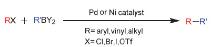
图1
Suzuki偶联的一般路线图"
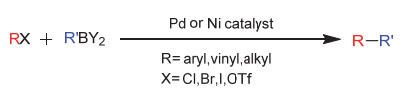

图2
Pd/C催化4-联苯甲酸合成路线图"


表1
5次Pd/C回收再利用实验对比表*"
| 回收次数 | 反应时间/min | 产率 | 回收次数 | 反应时间/min | 产率 | |
| 1 | 32 | 92% | 4 | 40 | 90% | |
| 2 | 35 | 91% | 5 | 50 | 90% | |
| 3 | 37 | 91% |
| 1 |
Navarro O. ; Kelly R. A. ; Nolan S. P. J. Am. Chem. Soc. 2003, 125, 16194.
doi: 10.1021/ja038631r |
| 2 |
Barder T. E. ; Walker S. D. ; Martinelli J. R. ; Buchwald S. L. J. Am. Chem. Soc. 2005, 127, 4685.
doi: 10.1021/ja042491j |
| 3 | 杨柳波; 王利民; 刘炼; 潘笑娟. 化工进展, 2007, 26 (5), 615. |
| 4 | 刘宁; 刘春; 金子林. 有机化学, 2012, 32 (5), 86. |
| 5 | 段新红. 化学教育, 2020, 41 (20), 55. |
| 6 |
赵圣印; 程健; 邵志宇; 黄婧. 广州化工, 2013, 41 (5), 191.
doi: 10.3969/j.issn.1001-9677.2013.05.073 |
| 7 |
韩维. 广州化工, 2016, 44 (10), 197.
doi: 10.3969/j.issn.1001-9677.2016.10.071 |
| 8 |
Dai J. ; Lu D. ; Ye T. ; Yu S. ; Cheng X. J. Chem. Educ. 2019, 96, 2672.
doi: 10.1021/acs.jchemed.9b00191 |
| 9 |
Costa N. E. ; Pelotte A. L. ; Simard J. M. ; Syvinski C. A. ; Deveau A. M. J. Chem. Educ. 2012, 89, 1064.
doi: 10.1021/ed200212p |
| 10 |
Hamilton A. E. ; Buxton A. M. ; Peeples C. J. ; Chalker J. M. J. Chem. Educ. 2013, 90, 1509.
doi: 10.1021/ed4002333 |
| 11 |
Hill N. J. ; Bowman M. D. ; Esselman B. J. ; Byron S. D. ; Kreitinger J. ; Leadbeater N. E. J. Chem. Educ. 2014, 91, 1054.
doi: 10.1021/ed400531w |
| 12 |
Hie L. ; Chang J. J. ; Garg N. K. J. Chem. Educ. 2015, 92, 571.
doi: 10.1021/ed500158p |
| 13 |
Soares P. ; Fernandes C. ; Chavarria D. ; Borges F. J. Chem. Educ. 2015, 92, 575.
doi: 10.1021/ed400498w |
| 14 |
Reyne P. ; Angus O. ; Smith J. A. ; Bissember A. C. J. Chem. Educ. 2018, 95, 2081.
doi: 10.1021/acs.jchemed.7b00964 |
| 15 |
Lee J. ; Schmink J. R. ; Berritt S. J. Chem. Educ. 2020, 97, 538.
doi: 10.1021/acs.jchemed.9b00794 |
| 16 | Ang J. J. Chem. Educ. 2020, 98, 203. |
| 17 |
Koudehi M. F. ; Zibaseresht R. J. Chem. Educ. 2020, 97, 3822.
doi: 10.1021/acs.jchemed.0c00357 |
| 18 | Huang Z. ; Yan X. ; Jiang L. ; Jiang H. Chin. J. Catal. 2010, 31, 90. |
| 19 | Kitamura Y. ; Sako S. ; Udzu T. ; Tsutsui A. ; Maegawa T. ; Monguchi Y. ; Sajiki H. Chem. Commun. 2007, 39, 5069. |
| 20 |
Khedkar M. V. ; Tambade P. J. ; Qureshi Z. S. ; Bhanage B. M. Eur. J. Org. Chem. 2010, 2010, 6981.
doi: 10.1002/ejoc.201001134 |
| 21 | 袁艳琴; 王艳; 郭圣荣. 化学试剂, 2010, 32 (5), 465. |
| 22 |
Rao X. ; Liu C. ; Xing Y. ; Fu Y. ; Qiu J. ; Jin Z. Asian J. Org. Chem. 2013, 2, 514.
doi: 10.1002/ajoc.201300053 |
| 23 | Liu C. ; Liu C. ; Li X. M. ; Gao Z. M. ; Jin Z. L. Chin. Chem. Lett. 2016, 5, 631. |
| 24 | 谭红红; 韩大年; 黄廷; 母先巧; 罗通; 雷开键; 薛智. 宜宾学院学报, 2017, 17 (6), 99. |
| 25 |
Adamo C. ; Amatore C. ; Ciofini I. ; Jutand A. ; Lakmini H. J. Am. Chem. Soc. 2006, 128, 6829.
doi: 10.1021/ja0569959 |
| 26 |
Corma A. ; García H. ; Leyva A. J. Catal. 2006, 240, 87.
doi: 10.1016/j.jcat.2006.03.007 |
| [1] | 陈建托, 尚凡朋. 第38届中国化学奥林匹克(初赛)第1题解析与溯源[J]. 大学化学, 2025, 40(10): 303 -308 . |
| [2] | 牛庆涛, 徐新尧, 于伟悦, 孟舒翔, 吕志果, 靳满满. 科教融合在化工专业化工热力学教学中的探索与实践——以化工物性数据估算和化学反应平衡为例[J]. 大学化学, 2025, 40(10): 1 -9 . |
| [3] | 刘雨同, 景学敏. “双碳”目标背景下甲烷的催化转化[J]. 大学化学, 2025, 40(10): 101 -113 . |
| [4] | 黄竹胜, 薛伟, 常永正, 汪联辉, 罗志敏. 物理化学实验教学改革:培养学生创新与实践能力[J]. 大学化学, 2025, 40(10): 10 -16 . |
| [5] | 王琳琳, 刘刚, 柴春笑, 路庆明, 马莹. 6S理念在高校仪器分析化学教学实验室规范化管理中的应用[J]. 大学化学, 2025, 40(10): 186 -193 . |
| [6] | 肖岩松, 黄熠, 马星星, 宋秋玲. Matteson反应在有机合成中的应用:基础到前沿[J]. 大学化学, 2025, 40(10): 114 -120 . |
| [7] | 吴倩, 吕远霞, 郭紫旋, 赵治皓, 张志敏, 卢红梅. 研究型仪器分析综合实验课程的案例与实践[J]. 大学化学, 2025, 40(10): 194 -202 . |
| [8] | 张渝阳, 张雨晴, 毛全兴, 陈梓萱, 熊英. 真实问题为导向的教学方法在分析化学教学中的应用[J]. 大学化学, 2025, 40(10): 17 -22 . |
| [9] | 陈烨荣, 杨冰彬, 何星磊, 林雨琦, 叶克印. 酶定向进化实现有机硅化合物转化[J]. 大学化学, 2025, 40(10): 121 -129 . |
| [10] | 朱佩佩, 汪莉, 陈莉莉, 廖勋凡, 陈义旺. 基于知识图谱的分析化学智慧教学探索[J]. 大学化学, 2025, 40(10): 23 -32 . |
| [11] | 张文文, 张培超, 盖聪昊, 柴晓云, 邹燕, 赵庆杰. 在自然丰度下的动力学揭秘:13C NMR同位素效应实验[J]. 大学化学, 2025, 40(10): 203 -207 . |
| [12] | 于鸿达, 章翰堂, 陈长宝, 尹延斌, 张坤, 尚鹏鹏, 朱树华, 张丽丽. 教育信息化改革下农林院校基础化学实验课程思政建设探索[J]. 大学化学, 2025, 40(10): 33 -38 . |
| [13] | 王一诺, 刘子羽, 谭红霞, 童军, 徐大振. 溴代苯并噁嗪的合成——推荐一个由本科科研创新转化的综合有机化学实验[J]. 大学化学, 2025, 40(10): 208 -216 . |
| [14] | 庄淑婷, 赵丽达. 以学定教,融教于研——微塑料废弃物制备碳量子点的综合实验设计[J]. 大学化学, 2025, 40(10): 217 -224 . |
| [15] | 林峰, 靳忠欣, 李彩莹, 邵秤, 徐扬, 李芳泽, 刘思琦, 顾睿宁. 泡沫镍负载Ni (OH)2-NiMoO4电极材料的制备及其电化学性能[J]. 大学化学, 2025, 40(10): 225 -232 . |
|
||
