大学化学 >> 2023, Vol. 38 >> Issue (5): 211-219.doi: 10.3866/PKU.DXHX202206043

化学实验 上一篇    下一篇

可见光诱导无金属催化合成邻四氢呋喃基苯乙酮肟醚

涂梦1, 刘小睿1, 尹钰芸1, 彭嘉琪1, 白芮华1, 张伟1, 沈永淼1,2,*()   

  1. 1 浙江理工大学理学院, 杭州 310018
    2 浙江大学浙江省激发态材料合成与应用重点实验室, 杭州 310027
  • 收稿日期:2022-06-13 录用日期:2022-09-22 发布日期:2022-10-10
  • 通讯作者: 沈永淼 E-mail:shenym@zstu.edu.cn

Visible Light-Induced Metal-Free Catalytic Synthesis of Acetophenone o-Tetrahydrofuran-2-Yl Oxime

Meng Tu1, Xiao-Rui Liu1, Yu-Yun Yin1, Jia-Qi Peng1, Rui-Hua Bai1, Wei Zhang1, Yong-Miao Shen1,2,*()   

  1. 1 Department of Chemistry, Zhejiang Sci-Tech University, Hangzhou 310018, China
    2 Key Laboratory of Excited-State Materials of Zhejiang Province, Zhejiang University, Hangzhou 310027, China
  • Received:2022-06-13 Accepted:2022-09-22 Published:2022-10-10
  • Contact: Yong-Miao Shen E-mail:shenym@zstu.edu.cn

摘要:

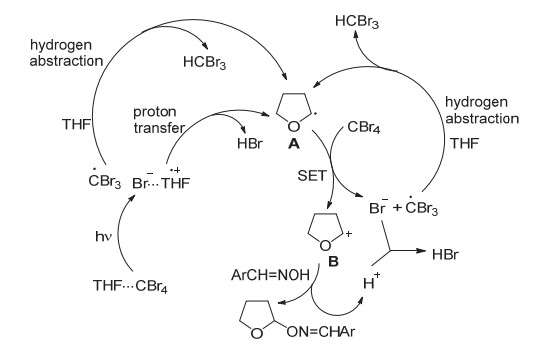
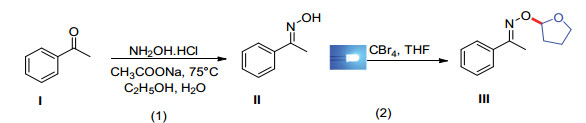
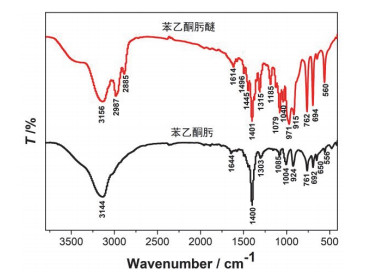
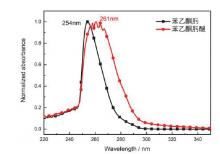
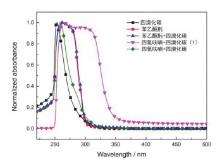
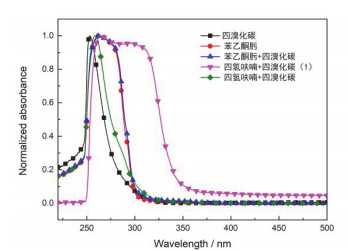
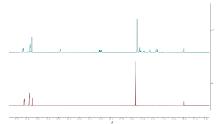
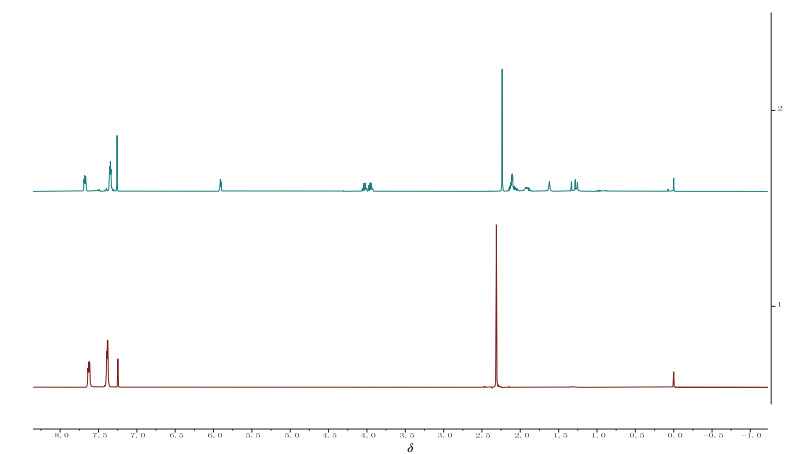
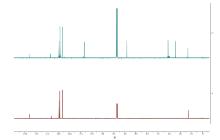
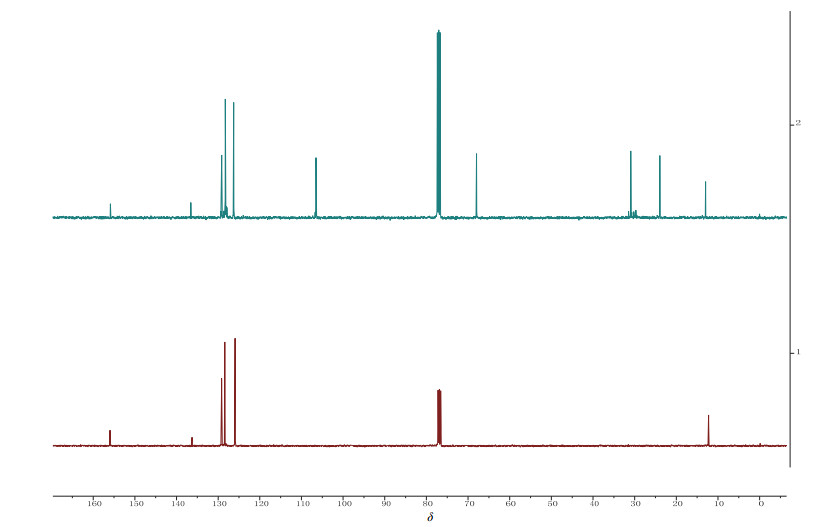
自由基反应作为有机化学的三大基本机理之一在实验教学中被长期忽略,造成理论与实践的脱节。本课题以苯乙酮肟和四氢呋喃为起始原料,在3 W蓝色LED光照下,由四溴化碳介导的经自由基历程构建C―O键合成邻四氢呋喃基苯乙酮肟醚,并利用核磁、红外、紫外手段对产物进行表征。本合成实验所需的设备简单、廉价,反应条件温和,且实验开设的普适性高。通过本实验的学习不仅可以让学生学习到溴自由基在有机合成中的应用,使学生能更好地理解和掌握自由基反应的过程,而且还能通过产物分子结构的分析,提高学生综合解谱的能力。

关键词: 苯乙酮肟醚, 自由基反应, 可见光催化, C―O键形成, 四溴化碳

Abstract:

As one of the three basic mechanisms in organic chemistry, the free radical reaction, has been neglected for a long time in experimental teaching, which has led to a disconnection between theory and practice. In this study, o-tetrahydrofuranyl acetophenone oxime ether was synthesized from acetophenone oxime and tetrahydrofuran by a free radical process mediated by carbon tetrachloride under 3 W blue LED light. The products were characterized by NMR, IR and UV spectroscopy. This experiment only requires simple and inexpensive equipment and mild reaction conditions, and has high universality. It teaches the application of bromine radicals in organic synthesis so that students can master their understanding of free radical reactions, and allows them to improve their practical skills by analyzing the molecular structure of the product.

Key words: Acetophenone oxime ether, Free radical reaction, Visible light catalysis, C―O bond formation, Carbon tetrachloride