University Chemistry ›› 2023, Vol. 38 ›› Issue (2): 271-276.doi: 10.3866/PKU.DXHX202206035

• Self Studies • Previous Articles     Next Articles

Understanding the Effect of Solvents on the Nucleophilicity of CH3O−/CH3S− Using Quantum Chemical Calculations

Rongxiu Zhu(), Xiaomo Wang, Jinxin Guo, Dongju Zhang()   

  • Received:2022-06-13 Accepted:2022-08-19 Published:2022-08-26
  • Contact: Rongxiu Zhu, Dongju Zhang E-mail:rxzhu@sdu.edu.cn;zhangdj@sdu.edu.cn

Abstract:

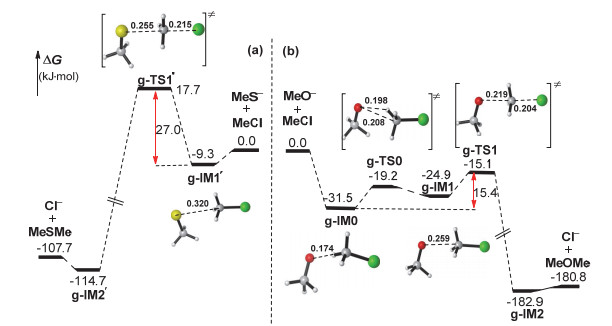
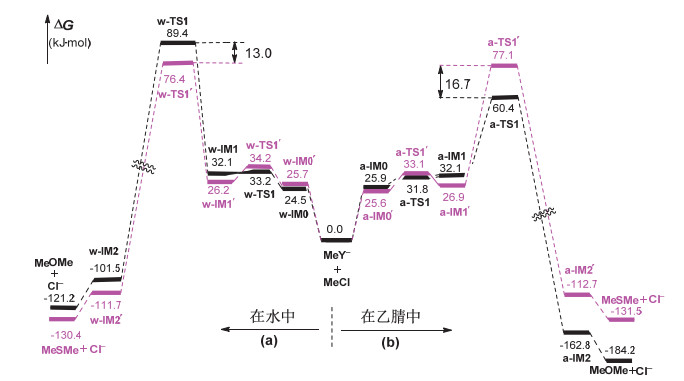
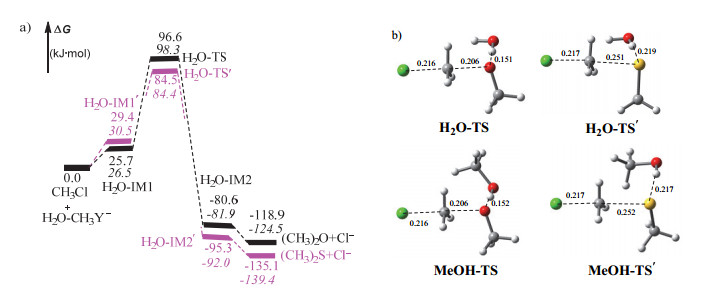
The effect of solvents on the nucleophilicity of nucleophiles is an important teaching topic in organic chemistry. Considering the bimolecular nucleophilic substitution (SN2) reaction between methoxide (CH3O−) and thiomethoxide (CH3S−) anions with chloroform (CH3Cl) as a representative example, this paper designs a teaching case for integrating computational chemistry into the organic chemistry curriculum. By performing quantum chemical calculations, we determined the reaction mechanism, obtained the thermodynamic and kinetic information of the reactions, and investigated the effect of solvents on the properties of nucleophiles. Polar protic solvents, such as methanol and water, and polar aprotic solvents, such as acetone, acetonitrile, and chloroform, were analyzed. The nucleophilic index was also calculated to evaluate the nucleophilic reactivities of CH3O− and CH3S−.

Key words: Nucleophilicity, SN2 reaction, Solvent effect, DFT calculations