University Chemistry ›› 2023, Vol. 38 ›› Issue (5): 202-210.doi: 10.3866/PKU.DXHX202207097

• Chemistry Laboratory • Previous Articles     Next Articles

Synthesis of Phenolphthalein Derivatives and Their Color Change Reaction

Yang Shen1, Hanxi Zhu1, Liyan Cheng2, Junpeng Zhuang2,*(), Tao Wang2,*()   
  1. 1 College of Materials Science and Engineering, Beijing University of Chemical Technology, Beijing 100029, China
    2 College of Chemistry, Beijing University of Chemical Technology, Beijing 100029, China
  • Received:2022-07-21 Accepted:2022-09-09 Published:2022-09-26
  • Contact: Junpeng Zhuang, Tao Wang E-mail:zhuangjp@mail.buct.edu.cn;wangtwj2000@163.com

Abstract:

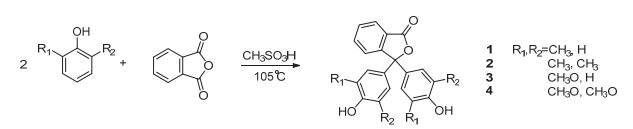
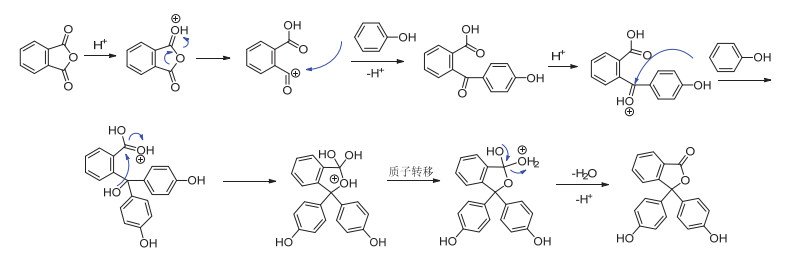
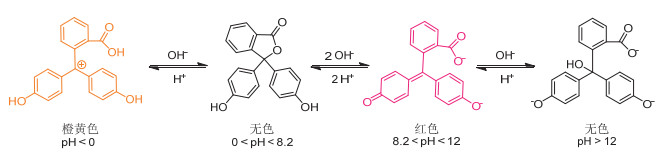
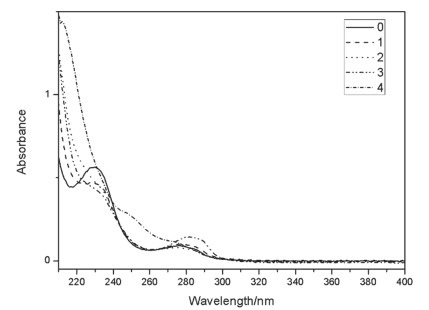
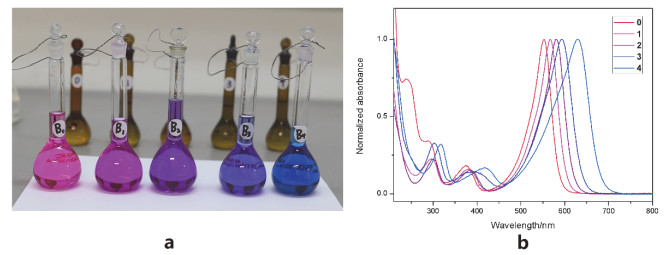
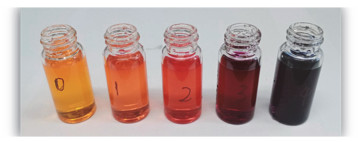
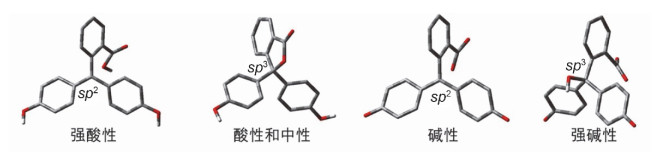
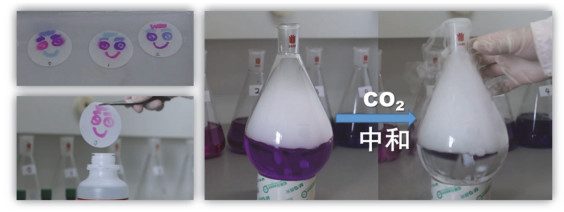
To improve the fundamental and essential experimental skills in organic chemistry for senior undergraduates majoring in chemistry and related disciplines, a comprehensive experimental procedure, including the synthesis, separation, UV–Vis spectrum analysis, and color change observation of phenolphthalein derivatives, was designed. The phenolphthalein derivatives were synthesized using four different phenol derivatives with phthalic anhydride in methane sulfonic acid, and separated and purified by standard organic synthesis operations, such as neutralization, extraction, suction filtration, rotary evaporation, and recrystallization. The ethanolic solutions of the phenolphthalein derivatives were colorless; however, the color of the alkaline aqueous solution of the phenolphthalein derivatives gradually transitioned from red to blue with the change of substituents. This phenomenon shows that the electron-donating effect of the substituents causes a redshift of the maximum absorption wavelength of these phenolphthalein derivatives in alkaline aqueous solution. Phenolphthalein derivatives are red to blue in strong acid solution with pH < 0, but colorless in strong alkaline aqueous solution with pH > 12, which is closely related to their molecular structure in different pH solutions. In this experiment, Gaussian software was used to optimize the phenolphthalein molecules under different pH conditions, and the relationship between the molecular structure of the phenolphthalein derivatives and their colors was discussed. Finally, based on the acid–base color-change reaction of phenolphthalein, other interesting experiments were designed to enable students to deeply understand how to apply new knowledge and enjoy learning through practical chemistry experiments.

Key words: Phenolphthalein derivatives, Color change reaction, UV-Vis spectra, Electron-donating effect