University Chemistry ›› 2023, Vol. 38 ›› Issue (4): 160-168.doi: 10.3866/PKU.DXHX202210032

Special Issue:

Previous Articles     Next Articles

Paired Electro-Synthesis of Zinc Gluconate and Sorbitol by Microchannel Reactor

Ying Yang(), Xianglin Zhou, Yongqi Tan, Boyu Hou, Jiahui Liu, Zhilin Wang, Hongbo Cui, Zhe Liu, Cong Li, Bin Cui, Yan Li   

  • Received:2022-10-11 Accepted:2022-12-11 Published:2023-03-07
  • Contact: Ying Yang E-mail:yingyang@nwu.edu.cn

Abstract:

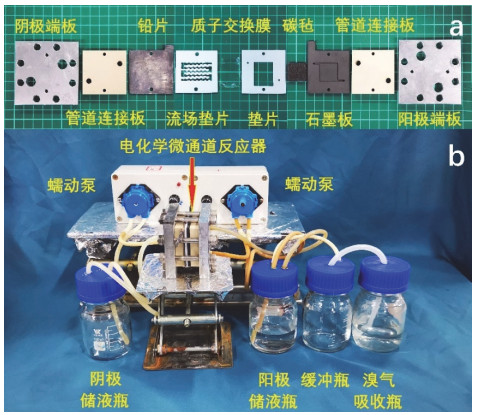
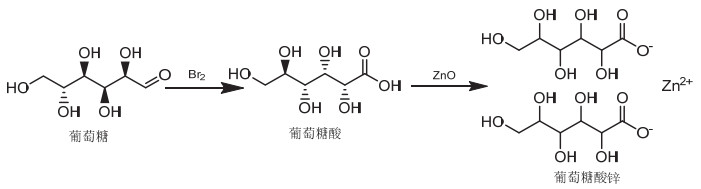
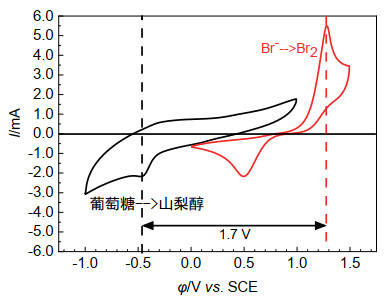
"Electrochemically oxidizing glucose to prepare zinc gluconate" is a typical organic synthesis experiment for undergraduates, in which H-cell is usually used as the reactor. There are some shortcomings, including the long synthesis time, the high applied voltage and the low current efficiency. A kind of new device, electrochemical microchannel reactor, can overcome these shortcomings, because of the decreased applied voltage and the enhanced mass transfer. Guided by the cultivation of students' independent thinking and logical thinking skills, this experiment improves the previous organic synthesis experiment into a comprehensive experiment, in which paired electro-synthesis of zinc gluconate and sorbitol is carried out through a home-made electrochemical microchannel reactor. In the teaching process, the principles and basic knowledge about electro-synthesis are introduced at first. Next, the students are guided to apply the cyclic voltammetry to select the appropriate applied voltage, then assemble the reactor to carry out the paired electro-synthesis. Finally, the products are separated and identified, and the results are analyzed and discussed. Through this experiment, students will understand why electroanalytical methods such as cyclic voltammetry can provide guiding information for electro-synthesis, the advantages of paired electro-synthesis, application advantages of new device of electrochemical microchannel reactors, and the relationship between organic electro-synthesis and green chemistry. The improved experiment has a rich teaching content, including electro-synthesis, electrochemical analysis, titration analysis and other typical laboratory skills, which helps students to cultivate scientific thinking and innovation ability in the process of analyzing and solving problems.

Key words: Organic electro-synthesis, Paired electro-synthesis, Glucose, Zinc gluconate, Sorbitol