University Chemistry ›› 2023, Vol. 38 ›› Issue (12): 257-261.doi: 10.3866/PKU.DXHX202305023

• Chemistry Laboratory • Previous Articles     Next Articles

Improvement in Colorimetric Detection of the Solubility Product Constant of Copper(Ⅱ) Iodate

Zidu Ding1, Yingjie Lei1, Yun Liang1, Xianghong Li1,*(), Yanying Wang2, Tao Huang1   

  1. 1 School of Chemistry and Materials Science, South-Central Minzu University, Wuhan 430073, China
    2 Experimental Teaching and Engineering Training Centre, South-Central Minzu University, Wuhan 430073, China
  • Received:2023-05-08 Accepted:2023-06-06 Published:2023-08-17
  • Contact: Xianghong Li E-mail:lixhchem@mail.scuec.edu.cn

Abstract:

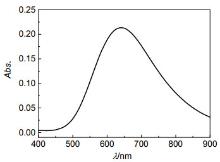
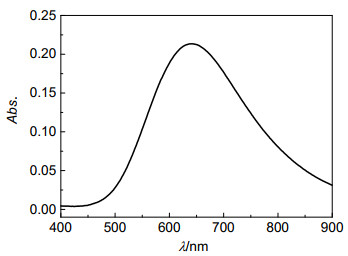
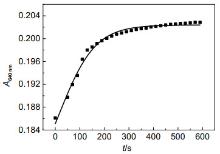
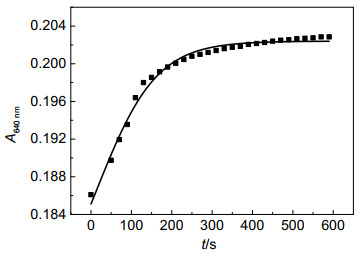
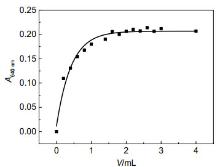
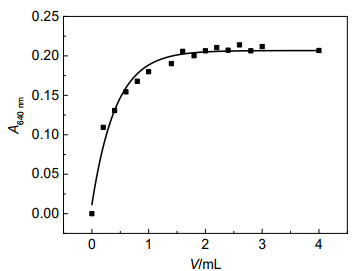
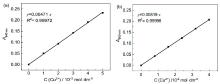
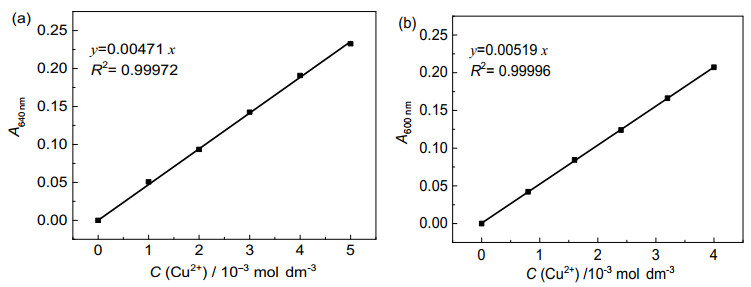
In recent studies, ammonia, a chromogenic reagent, has been used to detect the solubility product constant of copper(Ⅱ) iodate via colorimetry. However, the use of ammonia can result in environmental pollution. As an alternative, glycine can be used as the chromogenic reagent. In this study, the reaction between glycine and copper(Ⅱ) ions was investigated in detail. The reaction time and glycine concentration were optimized by acquiring UV-Vis spectra, determining the appropriate conditions for reacting the copper(Ⅱ) complex with glycine. The absorption intensities at 640 nm for solutions of copper(Ⅱ) ions at different concentrations were measured, and the concentration of copper(Ⅱ) ions in saturated copper(Ⅱ) iodate was determined by using the standard curve. The solubility product constant was calculated, which was close to the literature value. The release of corrosive and volatile gas was prevented in this experiment, and the complex solution could be recycled to prevent environmental pollution. Therefore, this method is green and applicable for use in basic experimental teaching activities.

Key words: Copper(Ⅱ) iodate, Solubility product constant, Colorimetry