大学化学 >> 2023, Vol. 38 >> Issue (9): 32-38.doi: 10.3866/PKU.DXHX202211096

教学研究与改革 上一篇    下一篇

基于小组合作学习的“线上预习–翻转课堂–课后探究”教学模式在化工原理教学中的应用

郝庆兰1, 苏俊超1, 贾原媛1, 刘亚2, 滕波涛1,*()   

  1. 1 天津科技大学化工与材料学院, 天津 300457
    2 浙江师范大学化学与生命科学学院, 浙江 金华 321004
  • 收稿日期:2022-11-29 录用日期:2023-01-09 发布日期:2023-09-21
  • 通讯作者: 滕波涛 E-mail:tbt@tust.edu.cn
  • 基金资助:
    教育部第二批新工科项目(E-HGZY2020200)

Application of "Online Preview-Flipped Classroom-Home Exploration" Teaching Mode Based on Cooperative Group Learning into Principles of Chemical Engineering

Qinglan Hao1, Junchao Su1, Yuanyuan Jia1, Ya Liu2, Botao Teng1,*()   

  1. 1 College of Chemical Engineering and Materials Science, Tianjin University of Science and Technology, Tianjin 300457, China
    2 College of Chemistry and Life Sciences, Zhejiang Normal University, Jinhua 321004, Zhejiang Province, China
  • Received:2022-11-29 Accepted:2023-01-09 Published:2023-09-21
  • Contact: Botao Teng E-mail:tbt@tust.edu.cn

摘要:

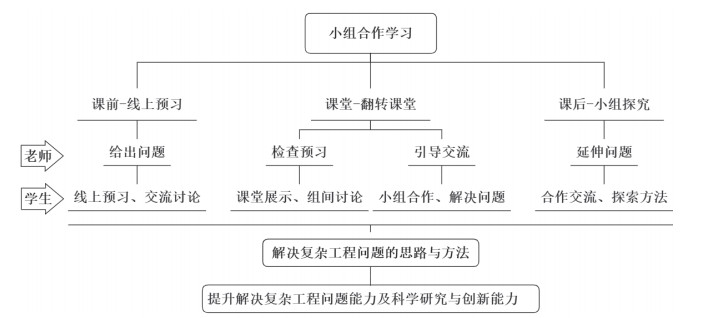
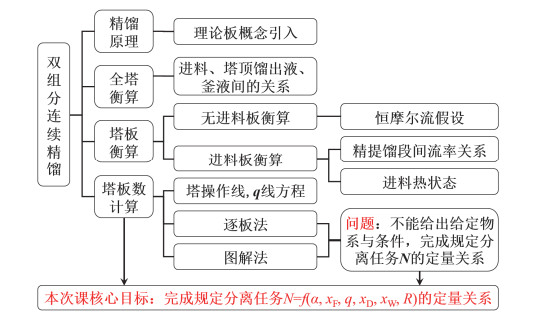
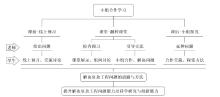
在化工原理国家一流线上课程与线上线下混合式教学基础上,开展了基于小组合作学习的线上预习–翻转课堂–课后探究的教学探索。以化工原理精馏单元操作中的塔板数简捷计算为例,对该教学模式进行阐述。通过班级分组、布置课前思考题,引导学生带着问题开展线上预习与小组合作学习,充分发挥了学生学习的主动性,大幅提高了线上预习、线下翻转课堂的教学效果与效率。通过师生翻转课堂教学与小组合作学习,使学生掌握了解决复杂工程问题的思路与方法,培养了学生解决复杂工程问题的能力。通过课后延伸问题与小组合作,引导学生课后进行学习与探究,学生建立了比现有文献适用范围宽得多的塔板数计算方程,培养了科学研究与创新能力。化工原理教学实践表明,基于小组合作学习的“线上预习–翻转课堂–课后探究”是一种较高效、通用性较强的高等工程教育教学模式。

关键词: 新工科, 教学模式, 小组合作学习, 线上预习, 翻转课堂, 课后探究

Abstract:

Based on the online and offline teaching of chemical engineering principles course, we carried out the teaching exploration combined with online preview, flipped classroom and home exploration on the basis of cooperative group learning. This work shows the teaching mode by taking the simple calculation of the tray number of distillation column as an example. On the basis of class grouping and pre-class thinking questions, the teacher guides students to online preview and cooperative group discussion with questions, by which students' learning initiative is ignited, and the teaching effect and efficiency of offline flipped classroom are greatly improved. Through flipped classroom and cooperative group learning, students master the ideas and methods to solve the complex engineering problems in chemical engineering, and can solve the corresponding complex engineering problems. Through extending problems and post-class group cooperation, students are guided to study and explore after class, by which students' scientific research and innovation ability is cultivated. Our teaching experiences indicated that "online preview-flipped classroom-home exploration" on the basis of cooperative group learning can be used as a general teaching mode in higher engineering education with high efficiency.

Key words: Emerging engineering education, Teaching mode, Group learning, Online preview, Flipped classroom, Home exploration