University Chemistry ›› 2023, Vol. 38 ›› Issue (1): 220-226.doi: 10.3866/PKU.DXHX202203020

• Chemistry Laboratory • Previous Articles     Next Articles

Exploratory Organic Chemistry Experiment Based on Hydrogen Bond Induction Theory: Synthesis and Rapid Identification of (+/−)-2-Methylenecitronellal

Jian Jin1, Xueping Yang1, Jing Cheng1, Peng Ren2,*()   

  1. 1 Education Center of Experiments and Innovations, Harbin Institute of Technology (Shenzhen), Shenzhen 518055, Guangdong Province, China
    2 School of Science, Harbin Institute of Technology (Shenzhen), Shenzhen 518055, Guangdong Province, China
  • Received:2022-03-10 Accepted:2022-05-06 Published:2022-05-12
  • Contact: Peng Ren E-mail:renpeng@hit.edu.cn

Abstract:

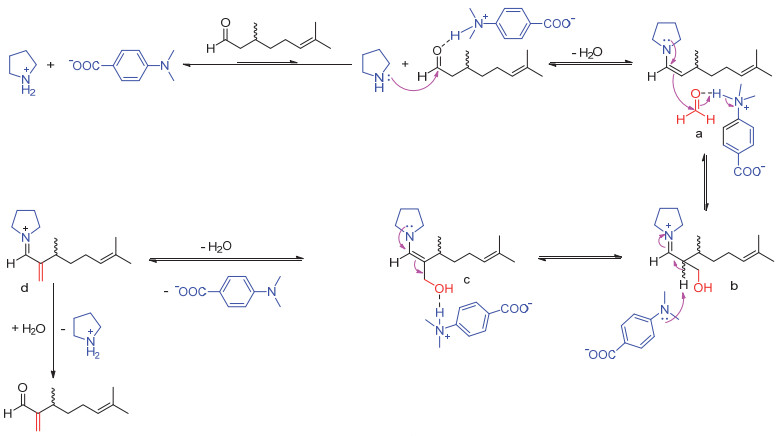
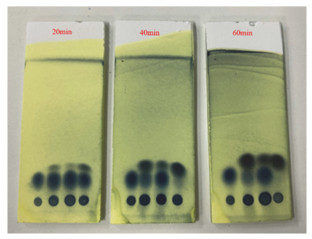
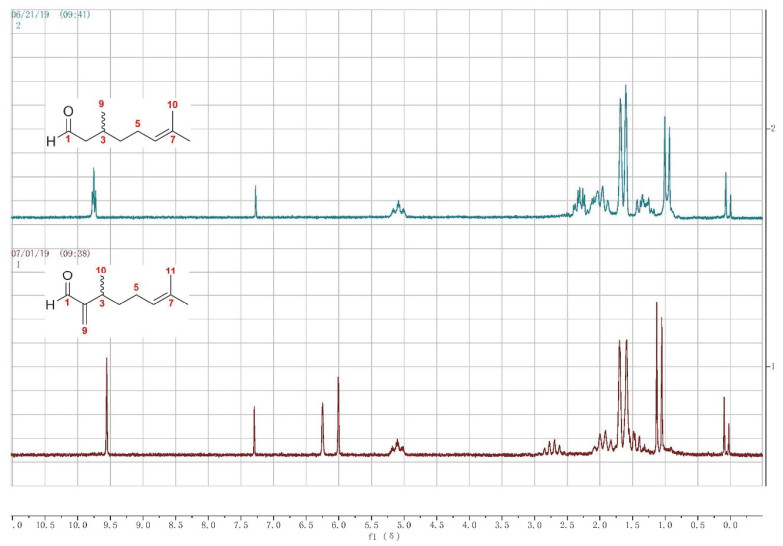
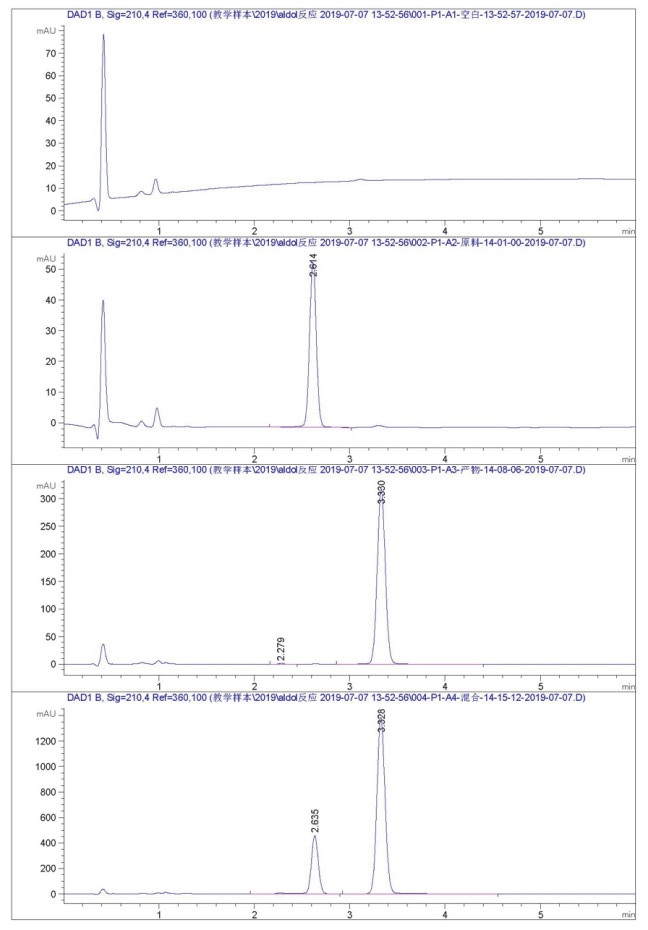
In this experiment, pyrrolidine and 4-dimethylaminobenzoic acid were used as organic small molecule catalysts to catalyze the Aldol condensation and dehydration of natural fragrance (+/−)-citronellal with formaldehyde to synthesize (+/−)-2-methylene citronellal. Based on the hydrogen bond induction effect, the solvents dichloromethane, tetrahydrofuran, and anhydrous ethanol were selected for use in parallel reactions. All the reactions were monitored by thin-layer chromatography, and the relatively optimal reaction solvent was determined. Simultaneously, we used the resonance delocalization theory to explain the difference in the NMR chemical shifts, thin layer chromatography ratio shifts, and liquid chromatography retention times of raw materials and products. This experiment fills the gap in the optimization of reaction conditions in organic chemistry experiments.

Key words: Organic small molecule catalysts, Aldol condensation, Hydrogen bond induction effect, Optimal reaction solvent