大学化学 >> 2023, Vol. 38 >> Issue (12): 242-249.doi: 10.3866/PKU.DXHX202305005

化学实验 上一篇    下一篇

化学实验室安全教育虚拟仿真实验教学设计与探索

柳荫(), 陆慧丽, 张玮玮, 柴成文, 袁文霞, 常璐璐, 郭丽芳   

  • 收稿日期:2023-05-08 录用日期:2023-07-12 发布日期:2023-08-08
  • 通讯作者: 柳荫 E-mail:B1921041@ustb.edu.cn
  • 基金资助:
    支撑双一流学科高水平人才培养的基础实验教学新体系的探索与实践(JG2021Z07);北京科技大学本科教育教学改革项目(JG2022M52)

Design and Exploration of Virtual Simulation for Safety Education in Chemical Laboratory Teaching

Yin Liu(), Huili Lu, Weiwei Zhang, Chengwen Chai, Wenxia Yuan, Lulu Chang, Lifang Guo   

  • Received:2023-05-08 Accepted:2023-07-12 Published:2023-08-08
  • Contact: Yin Liu E-mail:B1921041@ustb.edu.cn

摘要:

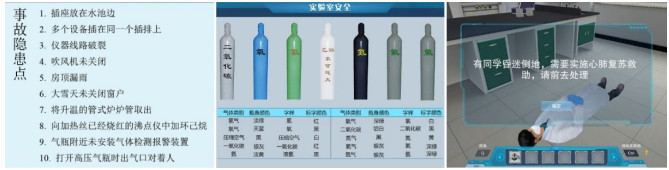
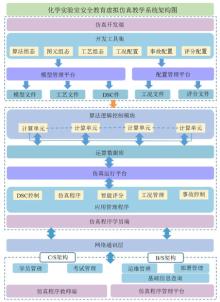
高校化学实验室事故种类繁多,已引起了社会的广泛关注,对学生的安全教育刻不容缓。利用三维可视化、网络通信、多媒体、人机交互等技术,构建了化学实验室安全教育虚拟仿真教学系统。该系统把化学实验室(无机化学实验室、有机化学实验室、分析化学实验室、物理化学实验室)涉及到的“典型事故案例”“隐患排查”“事故急救与逃生”等内容制作成可交互的虚拟仿真实验,为学生提供了高度仿真的虚拟实验环境,使学生“身临其境”学习如何解决火灾、药品灼伤、气瓶泄漏、触电等安全事故。这种虚实结合的教学方式,增强了学生的学习兴趣,避免了演练实操的不安全和高成本问题,提高了学生的安全技能和解决问题的能力,达到了安全教育的目的,推进了三全育人的教育方针。

关键词: 安全教育, 虚拟仿真, 化学实验室, 人机交互

Abstract:

The occurrence of accidents in college and university chemical laboratories has raised significant concerns in society, emphasizing the need for effective safety education for students. In response, a virtual simulation teaching system for safety education in chemical laboratories has been developed, incorporating 3D visualization, network communication, multimedia, and human-computer interaction. This system transforms "typical accident cases", "hidden trouble investigations", and "accident response and evacuation" scenarios in different chemistry laboratory settings (including inorganic chemistry, organic chemistry, analytical chemistry, and physical chemistry) into interactive virtual simulation experiments. These simulations provide students with a highly realistic virtual experimental environment, enabling them to effectively learn how to respond to safety incidents such as fires, chemical burns, gas leaks, and electric shocks. By combining virtual and real knowledge, this teaching approach enhances students' engagement, eliminates the risks and costs associated with practical training, and improves their safety skills and problem-solving abilities. Ultimately, this course achieves the objectives of safety education and aligns with the educational policy of "three complete education".

Key words: Safety education, Virtual simulation, Chemistry laboratory, Human-computer interaction