University Chemistry ›› 2023, Vol. 38 ›› Issue (5): 325-334.doi: 10.3866/PKU.DXHX202208005

• Chemical Olympiad Competition • Previous Articles     Next Articles

Results and Discussion on the Synthesis and Analysis of [Ni(Me3en)(acac)]BPh4 Complex: The Results and Discussion of Inorganic and Analytical Chemistry Experiment of the 10th National Undergraduate Chemistry Laboratory Tournament

Zhiqiang Dong1, Xin Chen1, Fengbin Wang2, Qing Wang2, Yourong Tao2, Chanzi Ruan1, Chunyan Zhang1, Wenwei Zhang2,*(), Yanping Ren1,*()   

  1. 1 National Demonstration Center for Experimental Chemistry Education (Xiamen University), College of Chemistry and Chemical Engineering, Xiamen University, Xiamen 361005, Fujian Province, China
    2 National Demonstration Center for Experimental Chemistry Education (Nanjing University), College of Chemistry and Chemical Engineering, Nanjing University, Nanjing 210023, China
  • Received:2022-08-01 Accepted:2022-09-07 Published:2022-12-02
  • Contact: Wenwei Zhang, Yanping Ren E-mail:wwzhang@nju.edu.cn;ypren@xmu.edu.cn

Abstract:

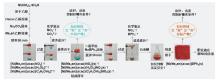
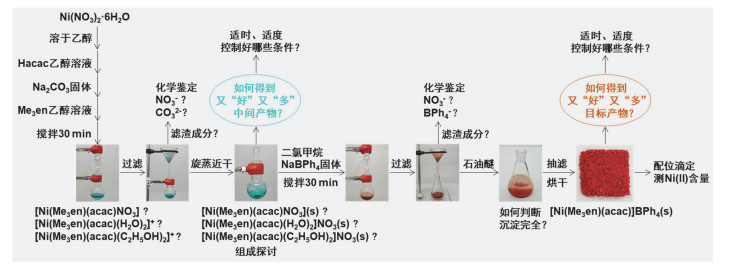
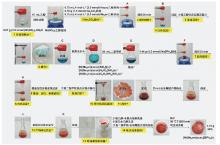
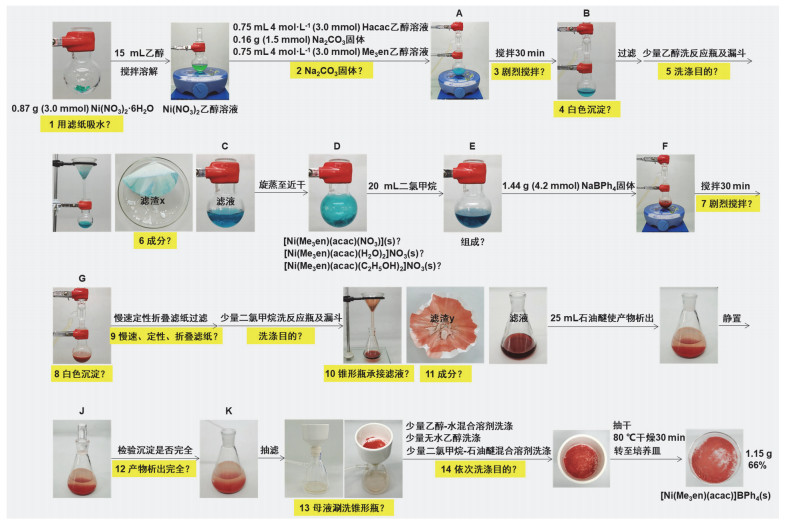
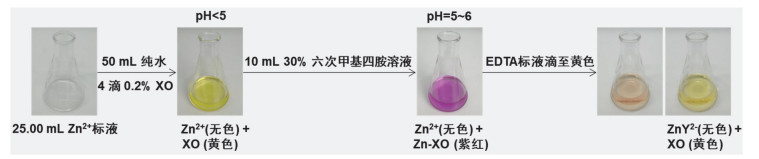
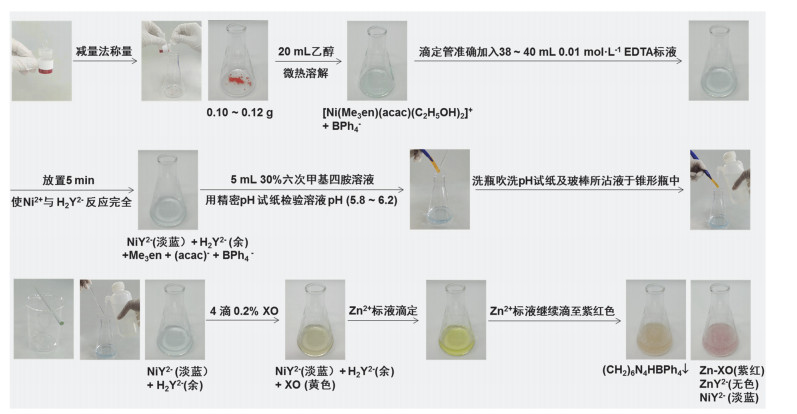
This paper mainly introduces the experiment implementation process, results and extension issues in the synthesis and composition determination part of the inorganic and analytical chemistry laboratory project, the synthesis of the complex [Ni(Me3en)(acac)]BPh4 and its solvato/thermochromic behavior research experiment, designed by Nanjing University for the 10th National Undergraduate Chemistry Laboratory Tournament. Based on the detailed and intuitive synthetic experimental process shown, we focus on the two major goals of synthesis, the "quality" and the "quantity", i.e., guided by how to obtain both "good" and "more" [Ni(Me3en)(acac)]BPh4 complex. By asking questions and discussing, we instruct students to understand the experimental process. Through the above process, the students are guided to understand the significance of the control of experimental conditions, the analysis of experimental phenomena and the separation, analysis and identification of intermediate products and impurities in the process of synthesis. As a result, students can develop the ability of analysis, judgment, induction, summarizing and critical thinking.

Key words: Ni(Ⅱ) complex, Synthesis, Composition determination, Analysis and discussion of problems