University Chemistry ›› 2024, Vol. 39 ›› Issue (2): 248-254.doi: 10.3866/PKU.DXHX202308016

• Study and Reform of Chemical Education • Previous Articles     Next Articles

Exploration and Practice of Flipped Classroom in Inorganic Chemistry Experiment: a Case Study on the Preparation of Inorganic Crystalline Compounds

Jinfeng Chu1, Lan Jin1, Yu-Fei Song1,2,*()   

  1. 1 College of Chemistry, Beijing University of Chemical Technology, Beijing 100029, China
    2 State Key Laboratory of Chemical Resource Engineering, Beijing University of Chemical Technology, Beijing 100029, China
  • Received:2023-08-01 Accepted:2023-08-29 Published:2023-09-12
  • Contact: Yu-Fei Song E-mail:songyf@mail.buct.edu.cn

Abstract:

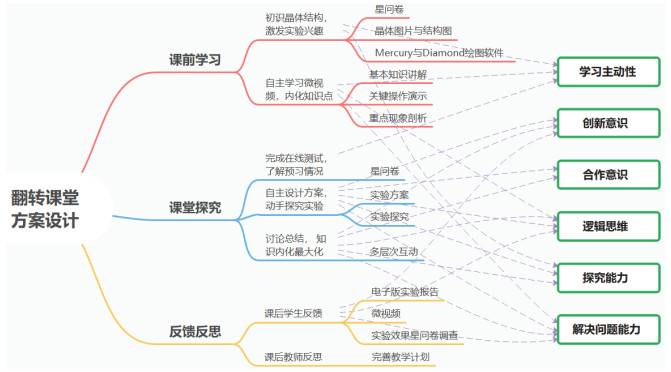
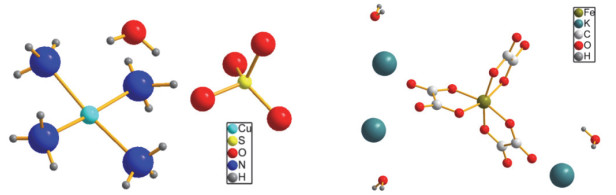
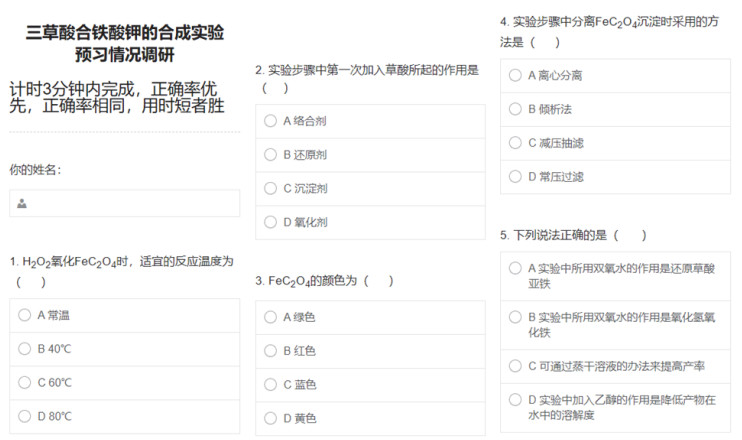
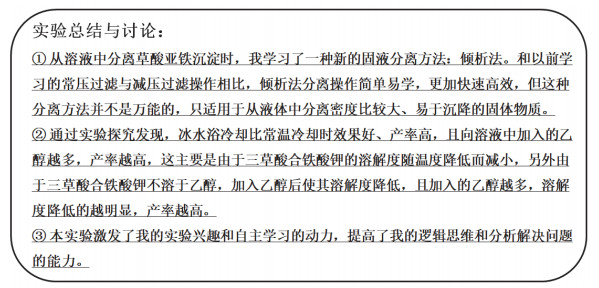
The traditional experimental teaching mode of inorganic chemistry presents certain drawbacks. Advances in information technology offer new opportunities for reinvigorating the experimental teaching mode. This study explores the reform and practice of flipped classroom teaching mode within the context of inorganic chemistry experimental, specifically focusing on the preparation of inorganic crystalline compounds, utilizing the crystal structures as the starting point to engage interest, and employing the star questionnaires as an effective evaluation method. The practical process includes three stages: pre-class preparation, in-class exploration, and post-class feedback and reflection. Our findings reveal that the flipped classroom teaching mode effectively stimulates students' interest in inorganic chemistry experiment, and enhances their learning initiative, innovative consciousness, logical reasoning and problem-solving ability.

Key words: Inorganic chemistry experiment, Flipped classroom, Crystal structure, Star questionnaire