University Chemistry ›› 2021, Vol. 36 ›› Issue (11): 2107079.doi: 10.3866/PKU.DXHX202107079

Special Issue:

Previous Articles     Next Articles

Research and Practice of Constructing a "Five-Combination" Talent Training System for Applied Chemistry Based on the Needs of Intelligent Refining in Petrochemical Industry

Jianhua Qian1,*(), Jilin Wang1, Yanbin Li2, Junhua Li1   
  1. 1 School of Petrochemical Technology, Liaoning Petrochemical University, Fushun 113001, Liaoning Province, China
    2 Development Planning Office, Liaoning Petrochemical University, Fushun 113001, Liaoning Province, China
  • Received:2021-07-25 Accepted:2021-07-28 Published:2021-09-09
  • Contact: Jianhua Qian E-mail:qianjianhualn@163.com

Abstract:

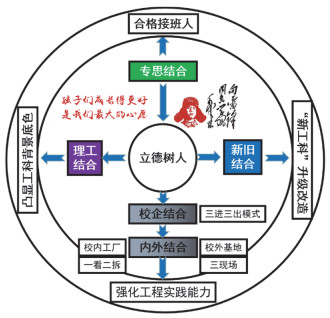
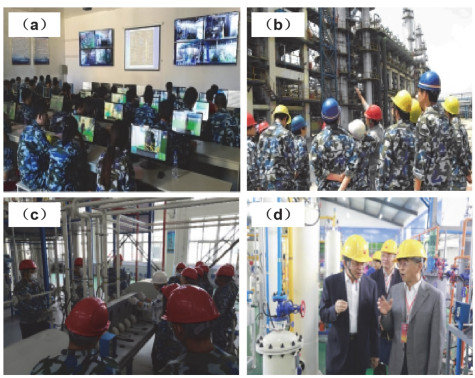
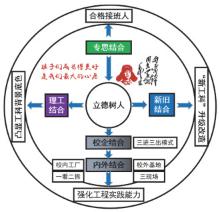
In response to the new development trend of the petrochemical industry, during the 13th Five-Year Plan period, a large number of petrochemical companies, including PetroChina, Sinopec, CNOOC, HENGLI Petrochemical, and SHENGHONG Petrochemical, have begun to transform and upgrade, and a new generation of "integrated" and "smart" refineries emerge. At the same time, emerging information technology has begun to be deeply integrated into the petrochemical production process, and the degree of integration and intelligence of petrochemical enterprises has increased significantly. As a major in applied chemistry of Liaoning Petrochemical University, which has closely served the petrochemical industry for more than 43 years, it has synchronized the standard industry upgrade path and actively carried out "Five Combinations" (professional and political, school and enterprise, internal and external, science and engineering, new and old) talent training model construction. After several years of exploration and practice, the "Five Combinations" talent training model has achieved good practical results. This study takes the applied chemistry majors of typical places and petrochemical industry universities as examples. After the form and connotation of the industries served by the key research majors have changed, how the majors should be related to the training process, curriculum system, and teaching content, and how the coordination should be adjusted to adapt to the new changes in the enterprise's demand for talents.

Key words: Applied chemistry, Talent cultivation, Petrochemical industry, Intelligent refining